A manufacturer is considering a move from SAP to Odoo. Before transferring data, it needs to decide which processes to keep and which to change. Those decisions shape the migration scope, costs and users’ future work.
Start with processes and responsibilities
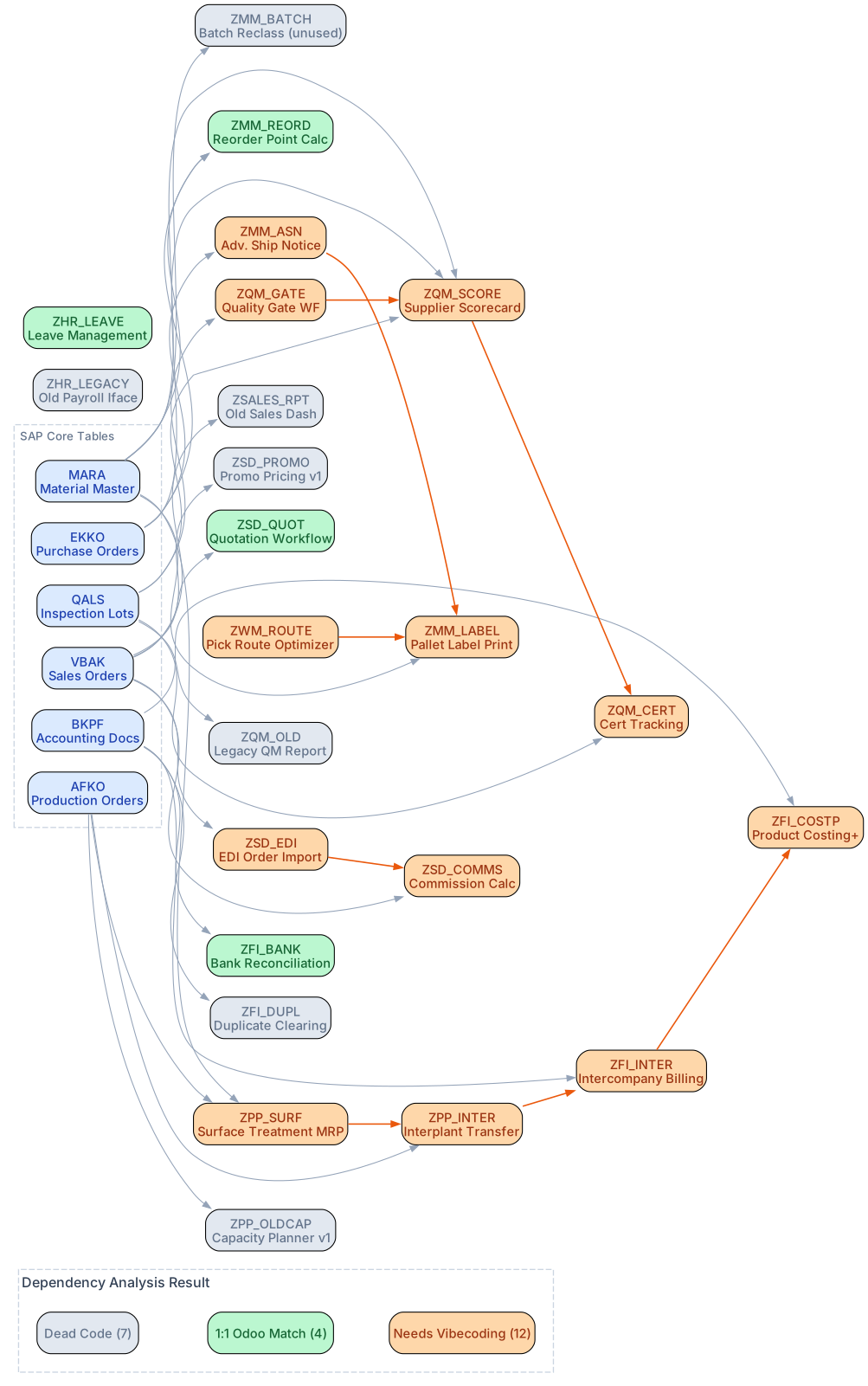
Map applications, custom SAP developments, system connections, user roles and required reports. List the core product, customer and supplier records, known as master data. Assign an owner to each process and record its dependencies on other systems.
Rehearse the data transfer
Compare business requirements with standard Odoo features. Define how products, business partners, opening balances and open transactions will move into the new system. Verify key connections and run a trial import. Reconcile totals between the systems before switching over.
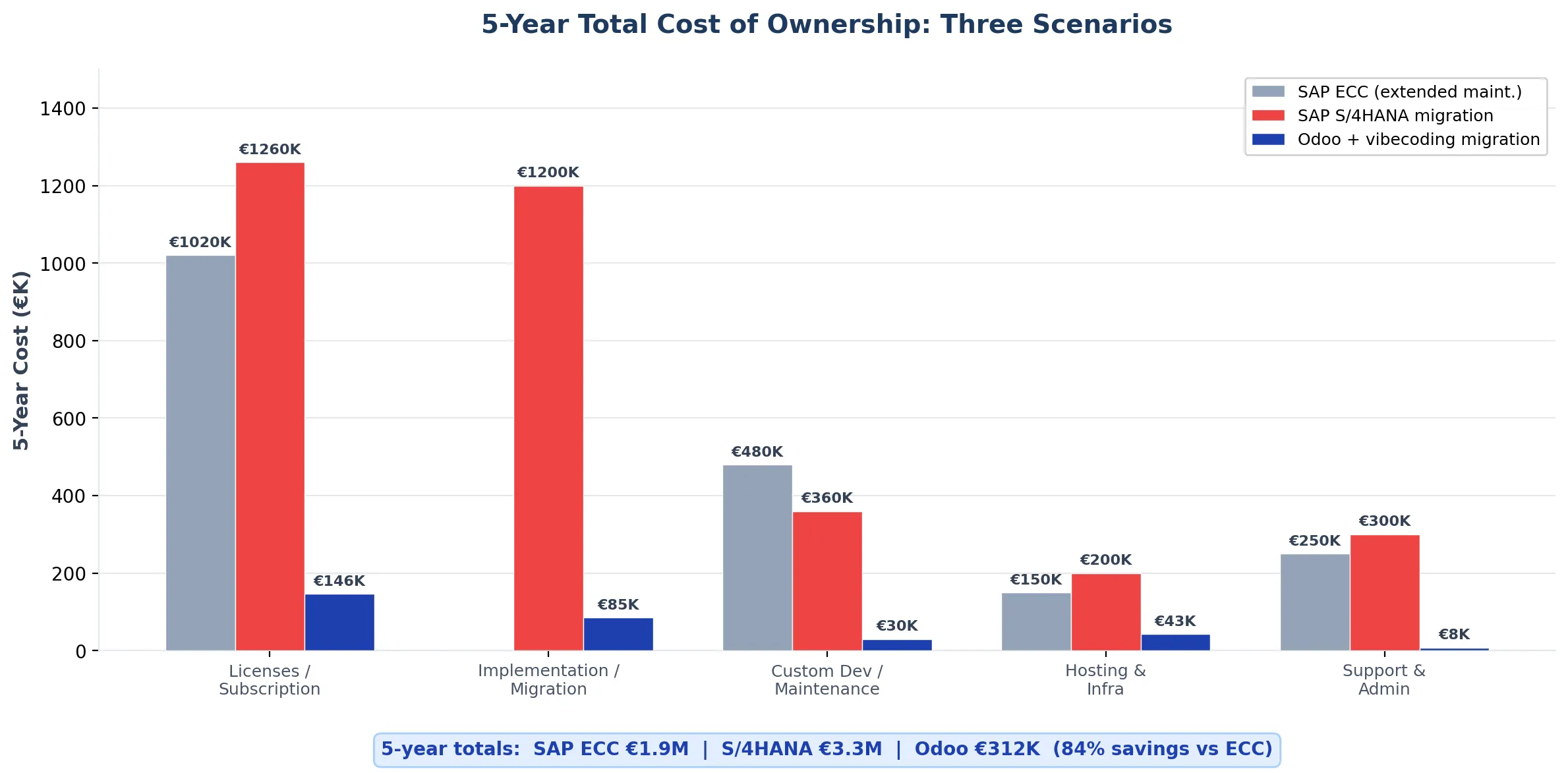
Compare complete costs
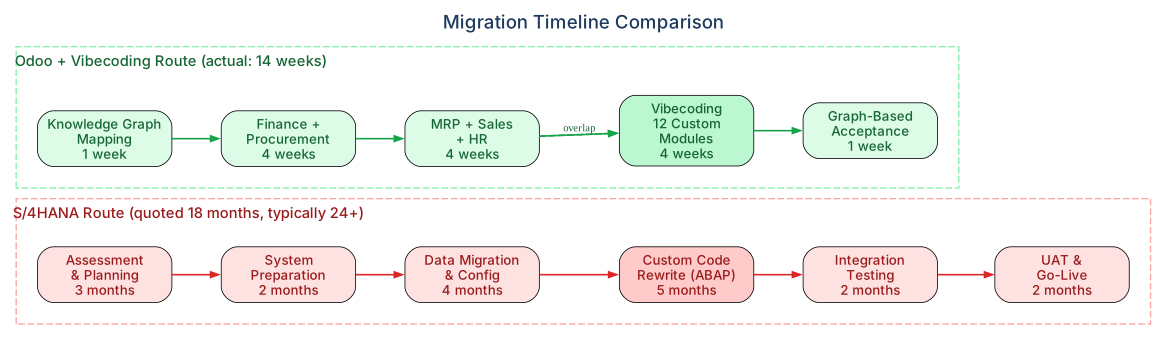
The model uses annual costs of EUR 380,000 and an alternative of EUR 62,000. The difference is EUR 318,000, about 84%. The amounts are illustrative, and the 14-week schedule is not a delivery promise. A real decision must include migration, support, licences, hosting and future upgrades.
Test everyday work and exceptions before launch
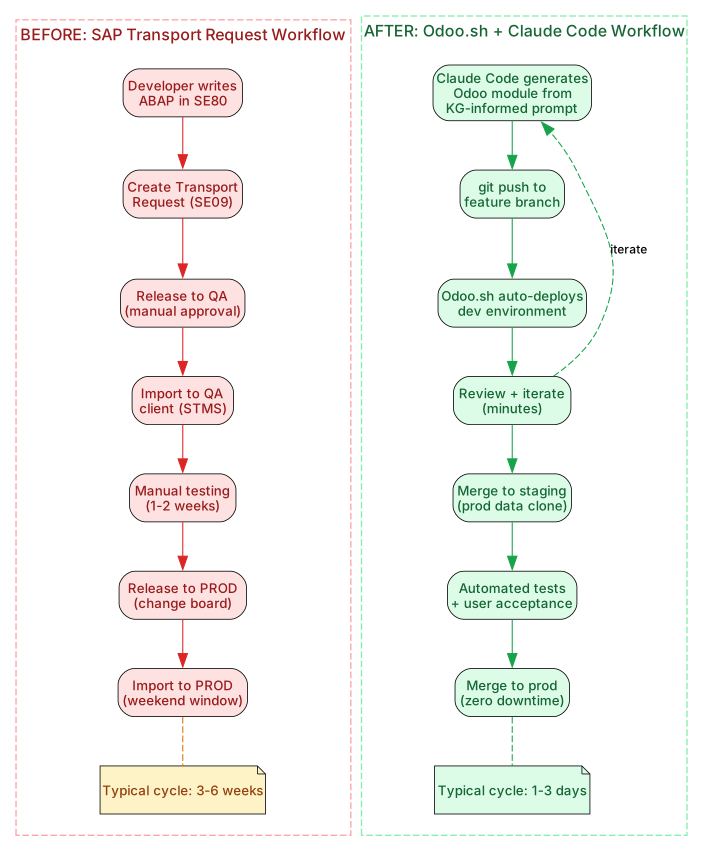
Agree with finance and operations on the tests they will use to accept the system. Check data consistency, permissions, behaviour during integration failures and the ability to return to the previous system. Using AI in development still requires code review, testing and a maintenance plan.
What the model figures show
The charts and diagrams illustrate the approach described above. Labels within the images are in English.