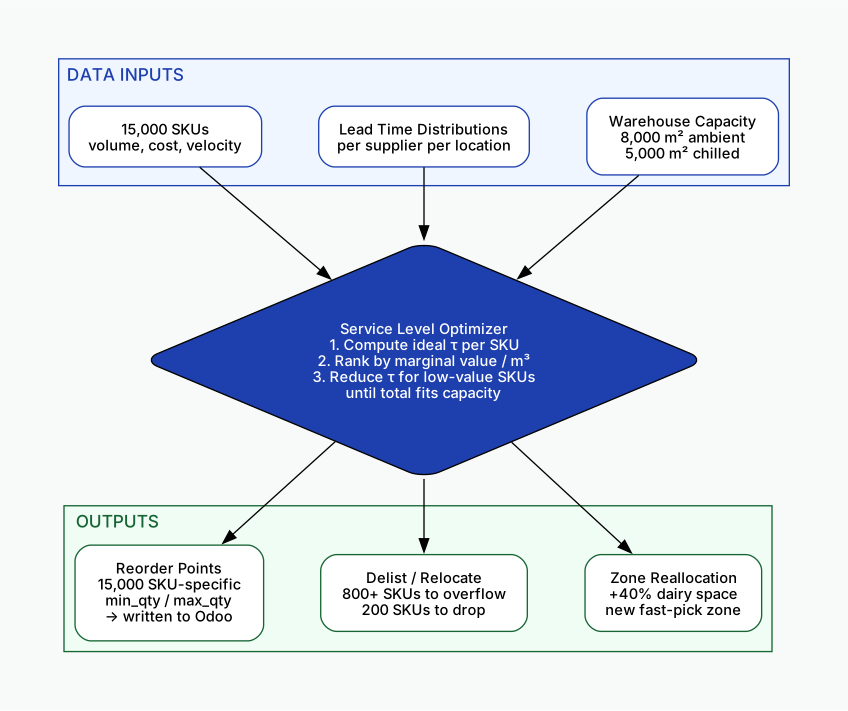
The warehouse has empty racks, yet some orders cannot be fulfilled. The problem may be how space is assigned to products rather than total capacity. This also matters for third-party logistics providers, known as 3PLs, that store and handle goods for other businesses.
Measure the space you can actually use
Map product dimensions, usable warehouse volume, demand and delivery times. Exclude inaccessible and reserved areas. Add contractual requirements for availability and order fulfilment. Space that appears free on a plan may not accommodate the products you need to receive.
Allocate space around demand and replenishment
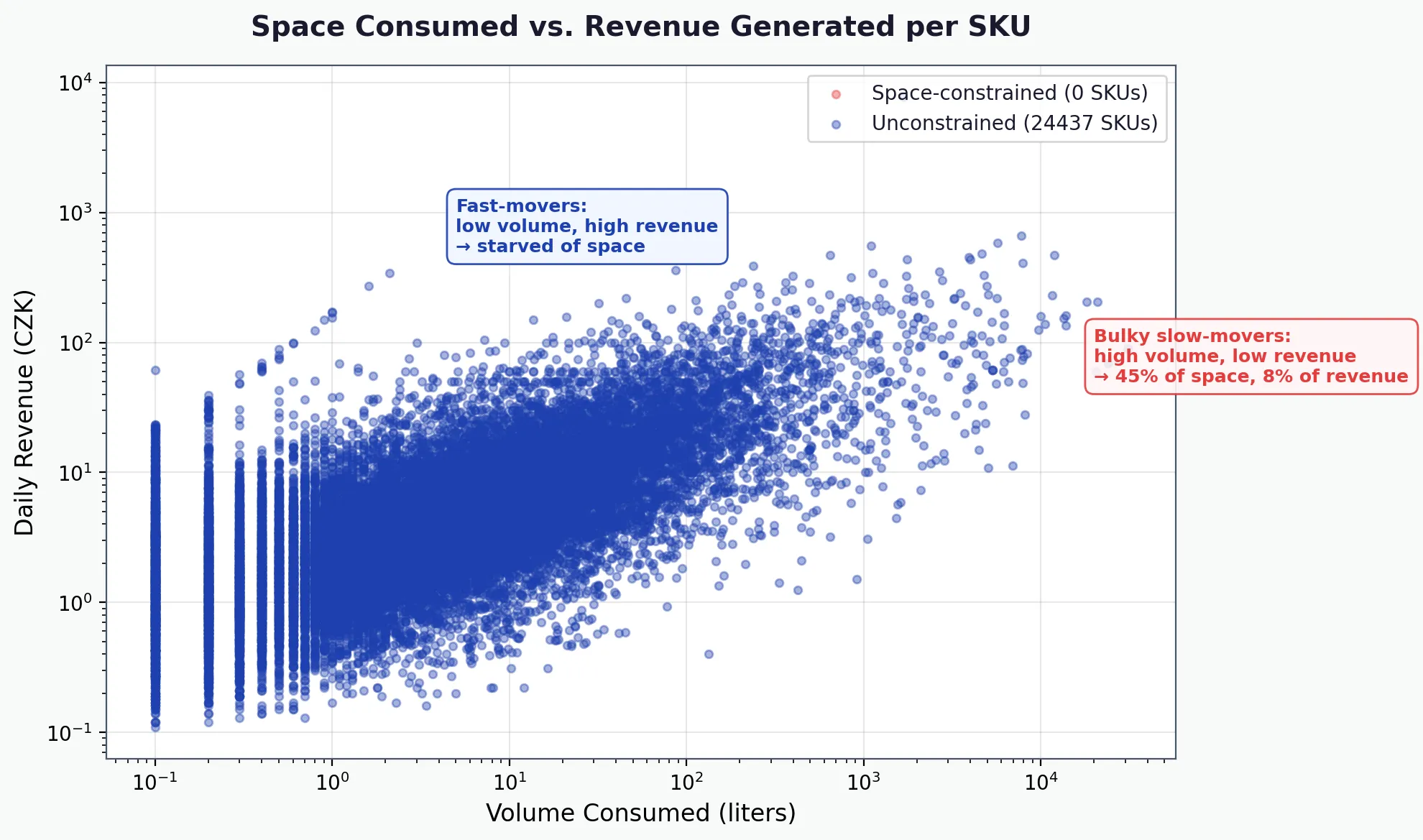
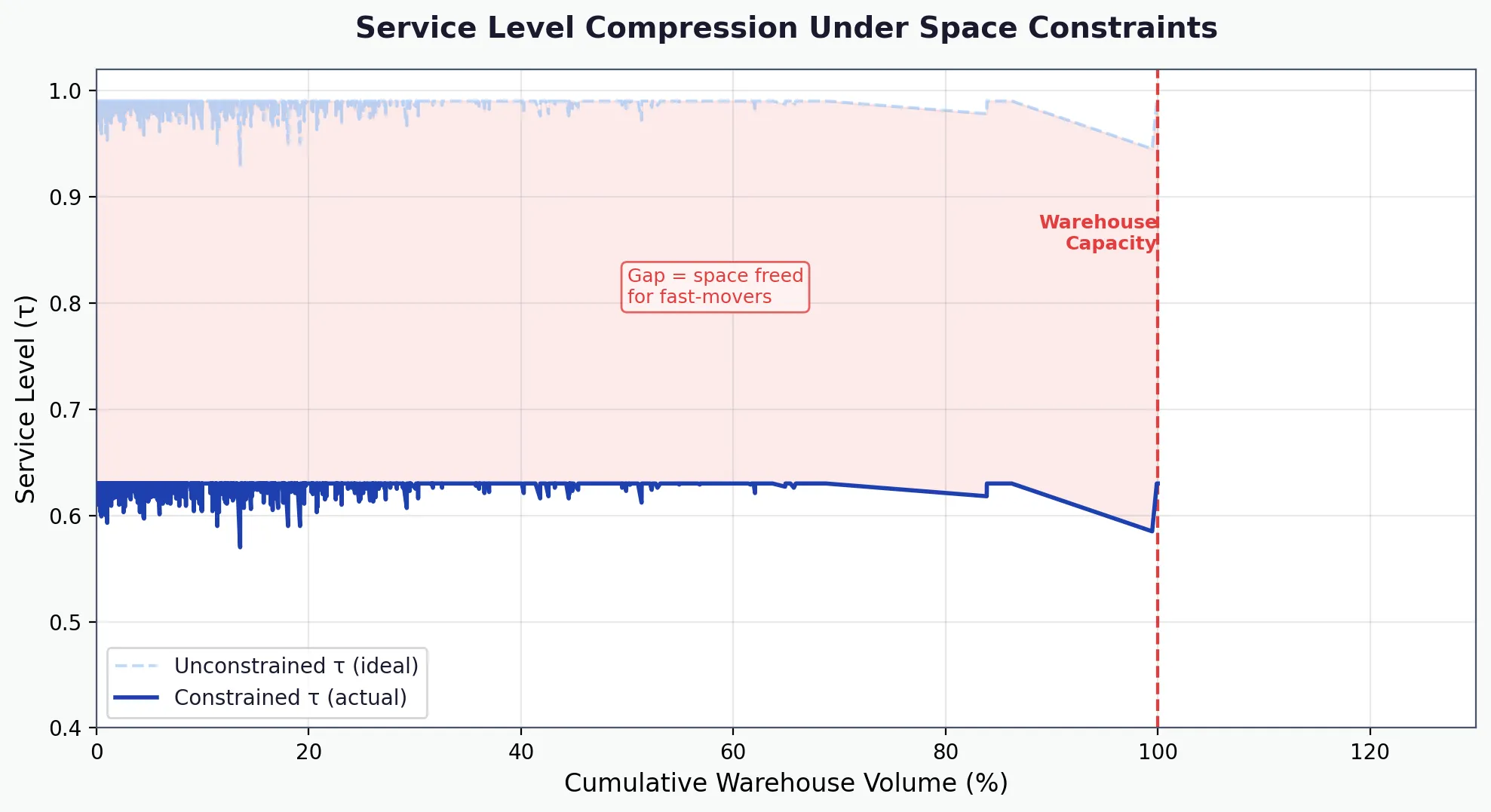
Compare space assigned to each product with its demand and delivery variability. Include external storage and handling costs. Test the proposal before changing storage locations and replenishment rules.
Occupancy alone does not measure performance
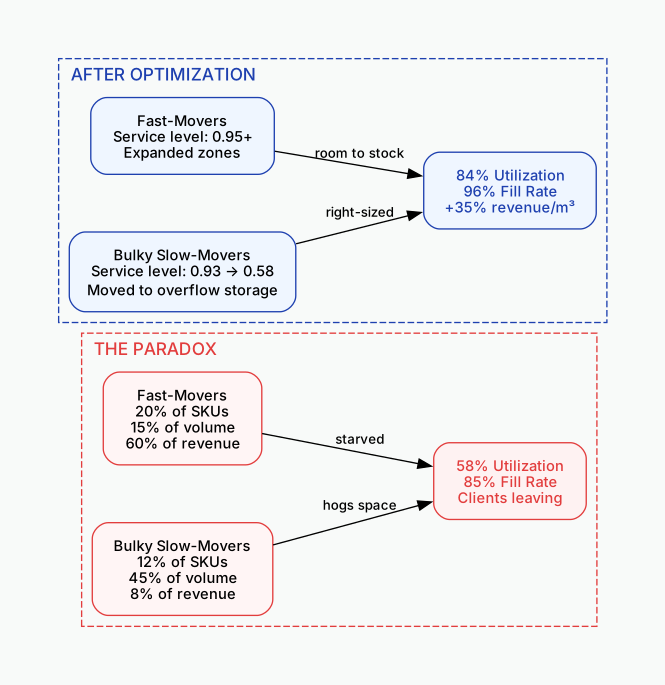
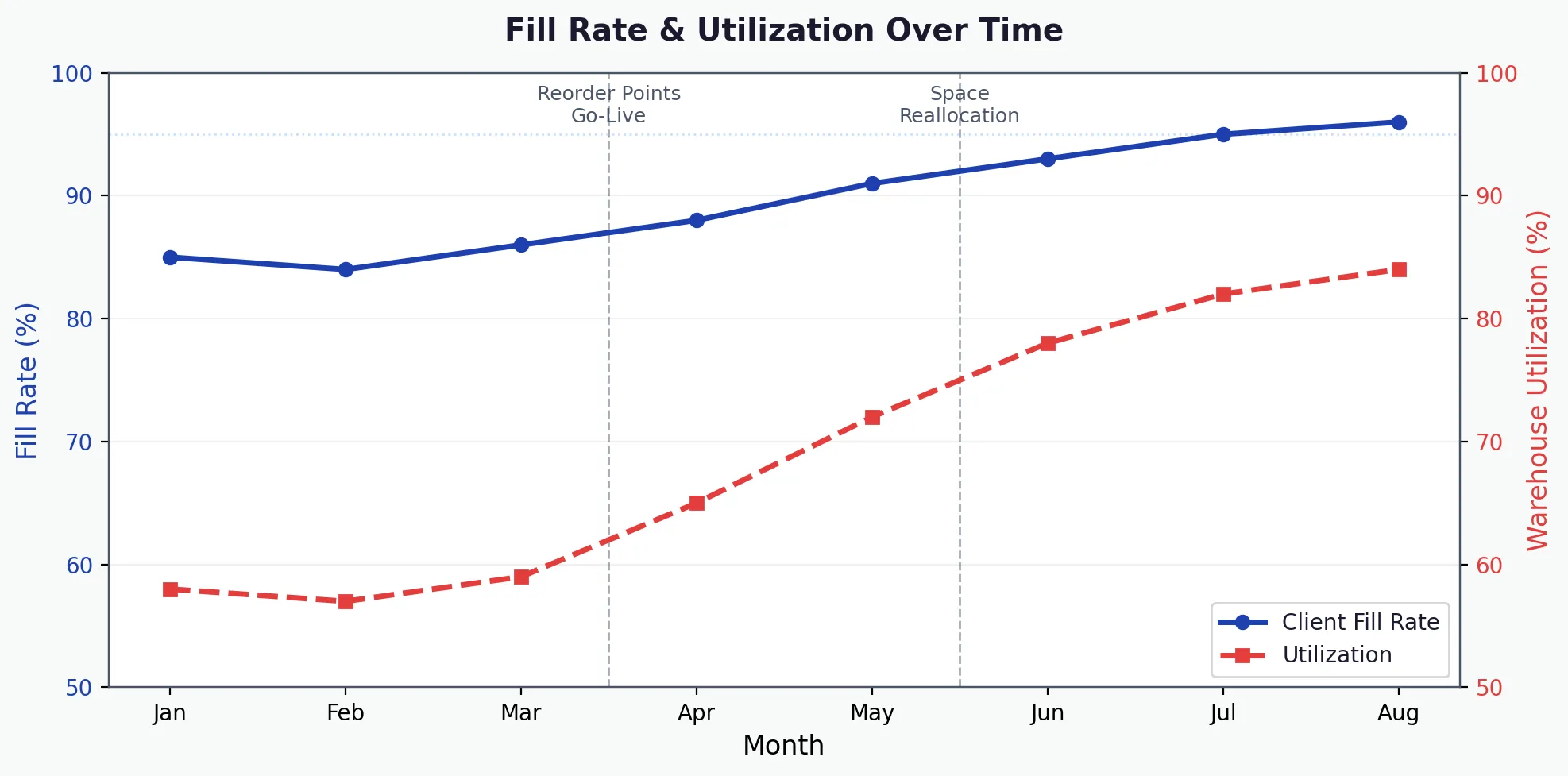
The model compares occupancy of 58% and 84%, a difference of 26 percentage points. Higher occupancy does not automatically mean more fulfilled orders, higher profit or faster work. This comparison alone cannot justify a warehouse expansion.
Try the change on a smaller scale
Assess product availability, handling time and costs together. Check aisle access, access to goods and room for normal operational fluctuations. A trial in a limited warehouse area can show whether the proposal is worth extending.
What the model figures show
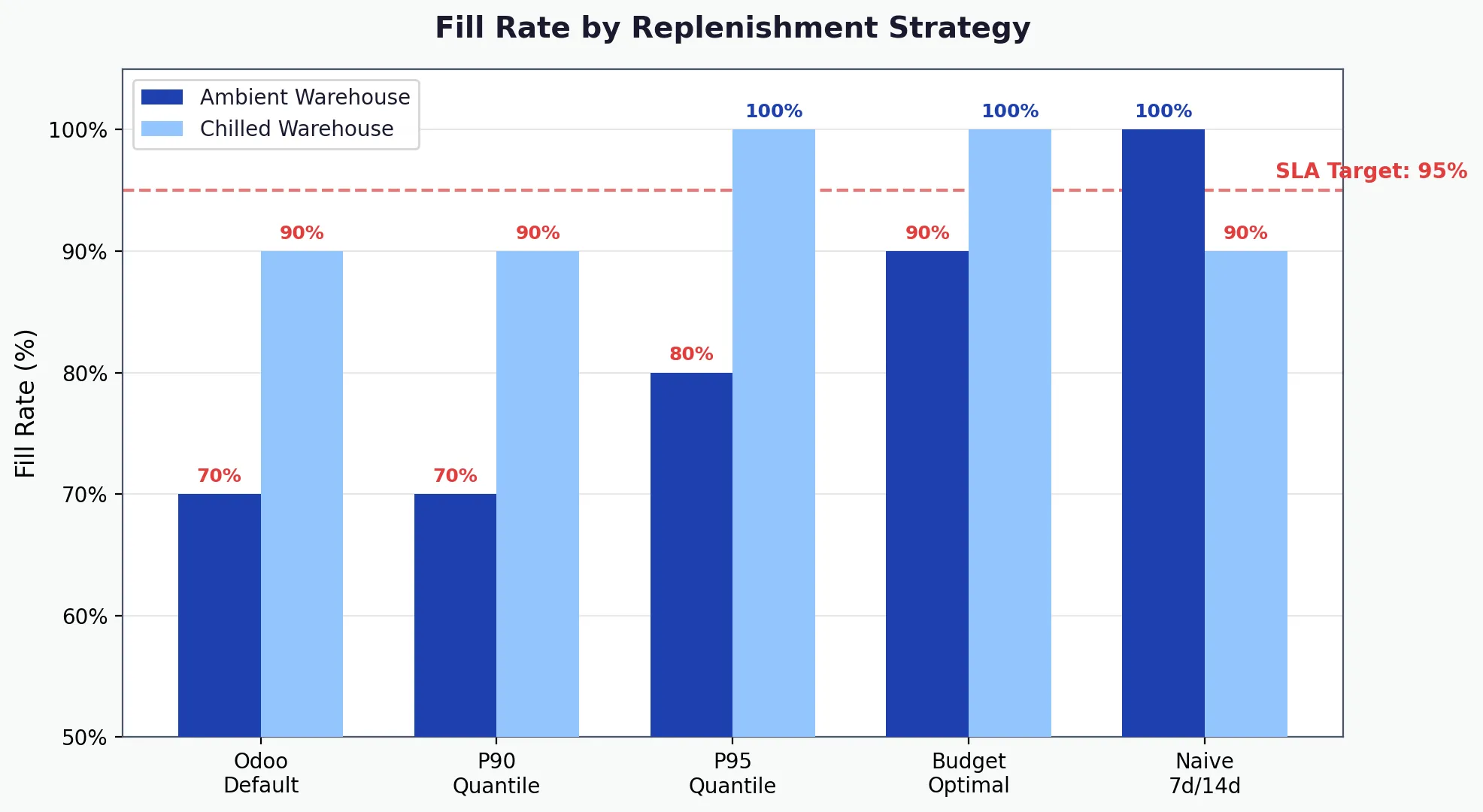
The charts and diagrams illustrate the approach described above. Labels within the images are in English.