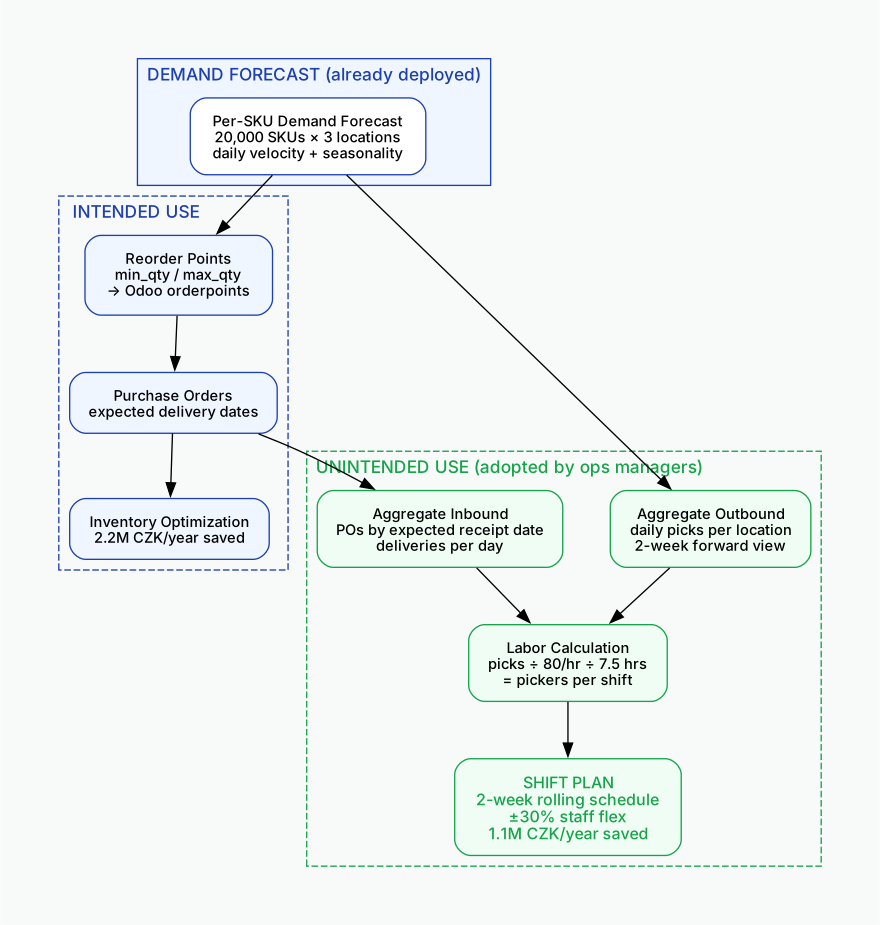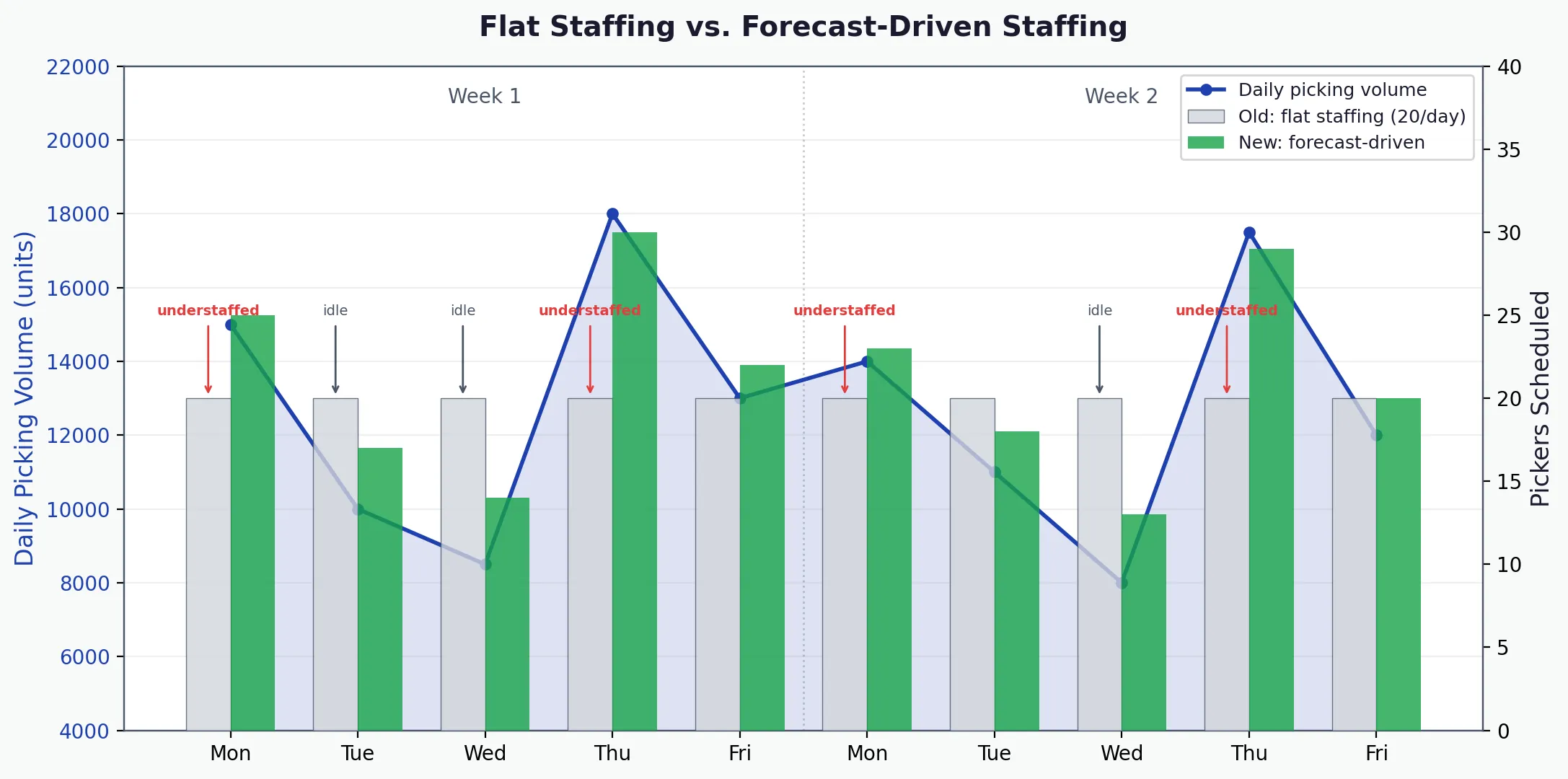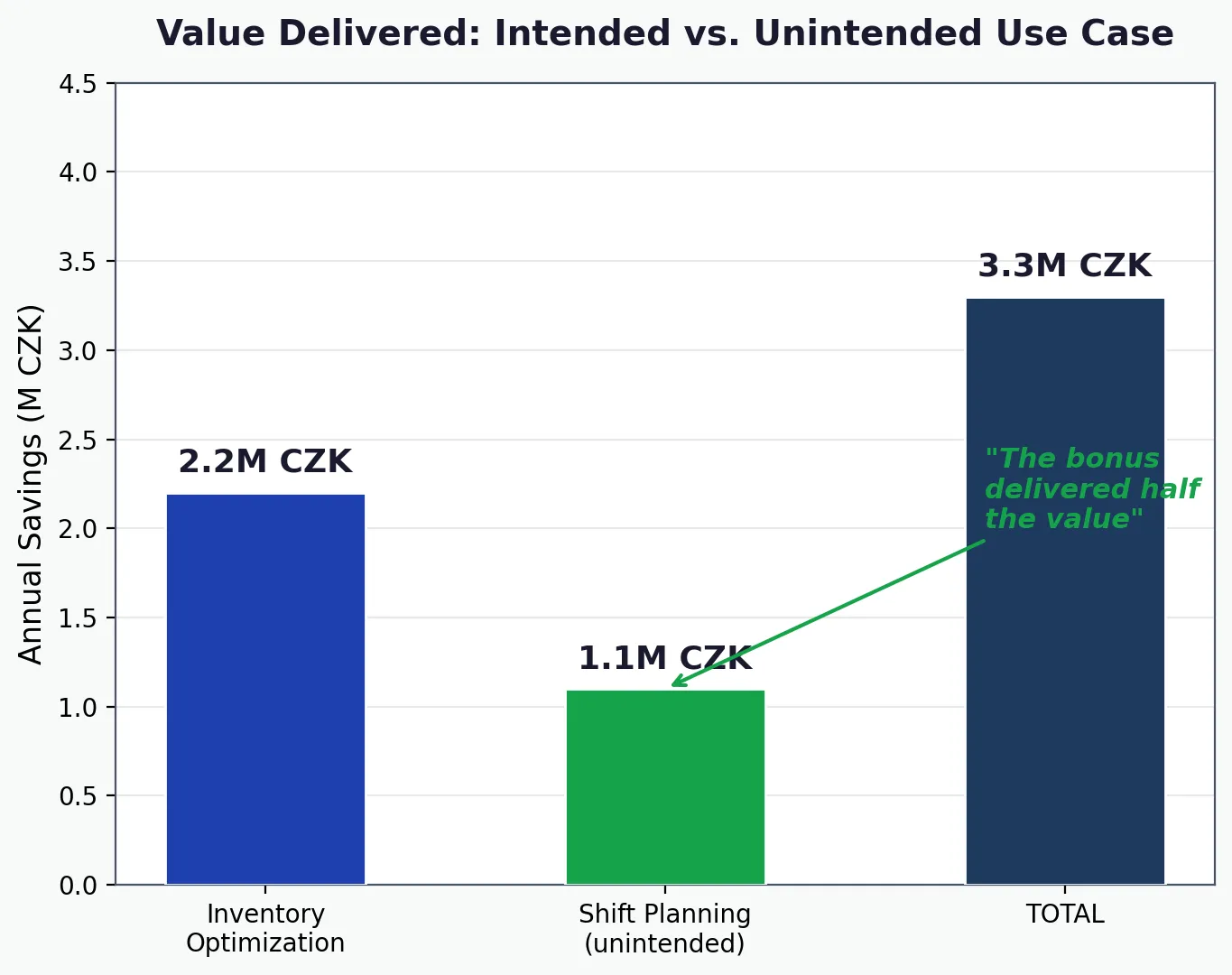
On some days the warehouse cannot keep up; on others, part of the shift waits for work. If shifts are planned without expected order volumes, headcount alone will not solve the problem. Estimating the workload for each day can help.
Work out how much effort orders require
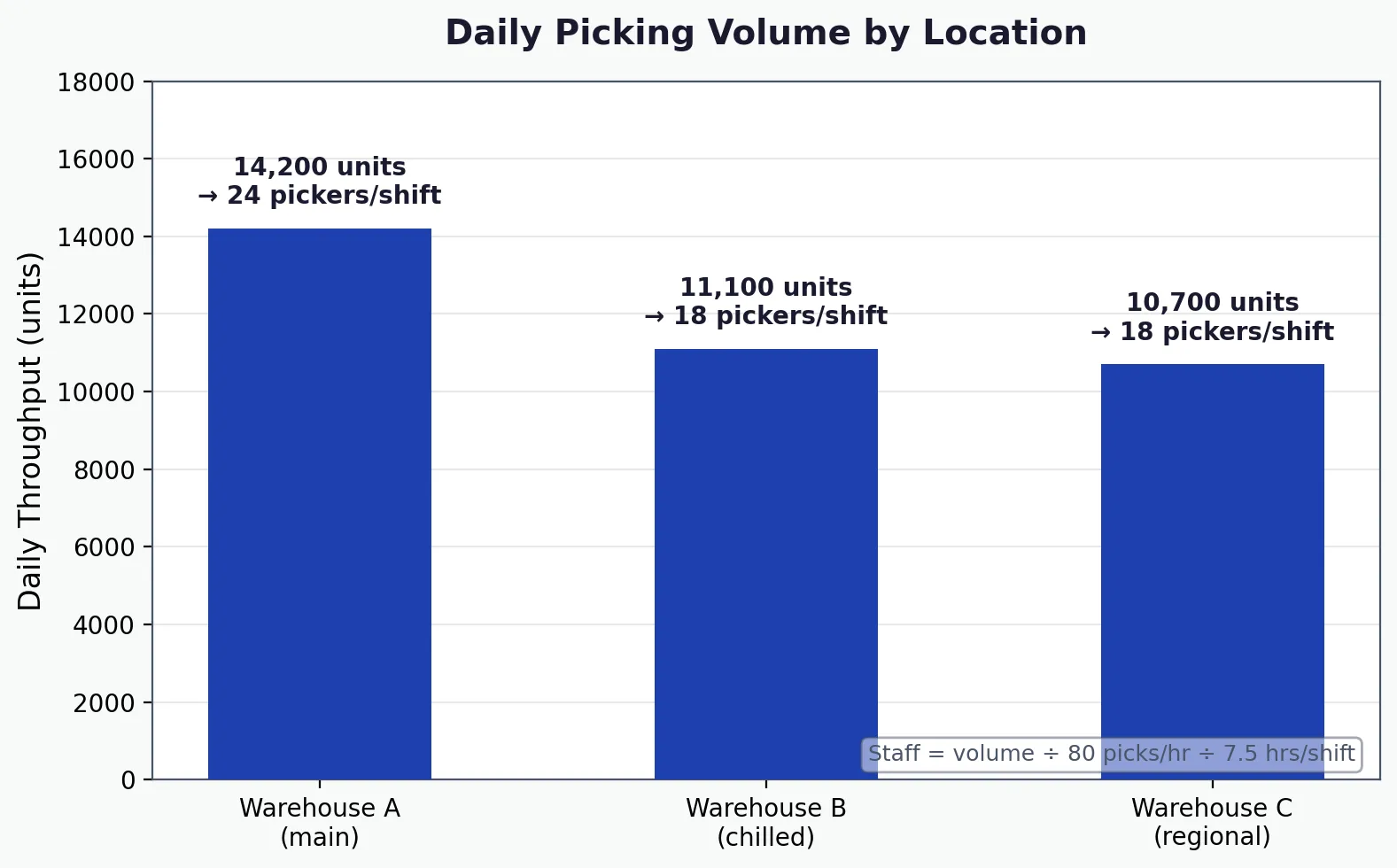
Connect order volumes with the time needed for individual tasks. Add shifts, employee skills and expected absences. Separate active work from breaks, training and necessary waiting. Promised dispatch dates matter too: the same number of orders may require different staffing depending on when they must leave.
Turn the forecast into staffing options
Convert expected orders into required working hours and allow for forecast uncertainty. Compare staffing options with available capacity and the required share of orders completed on time. Before publishing a schedule, the operations manager must check skills and operational exceptions.
Assess savings alongside service quality
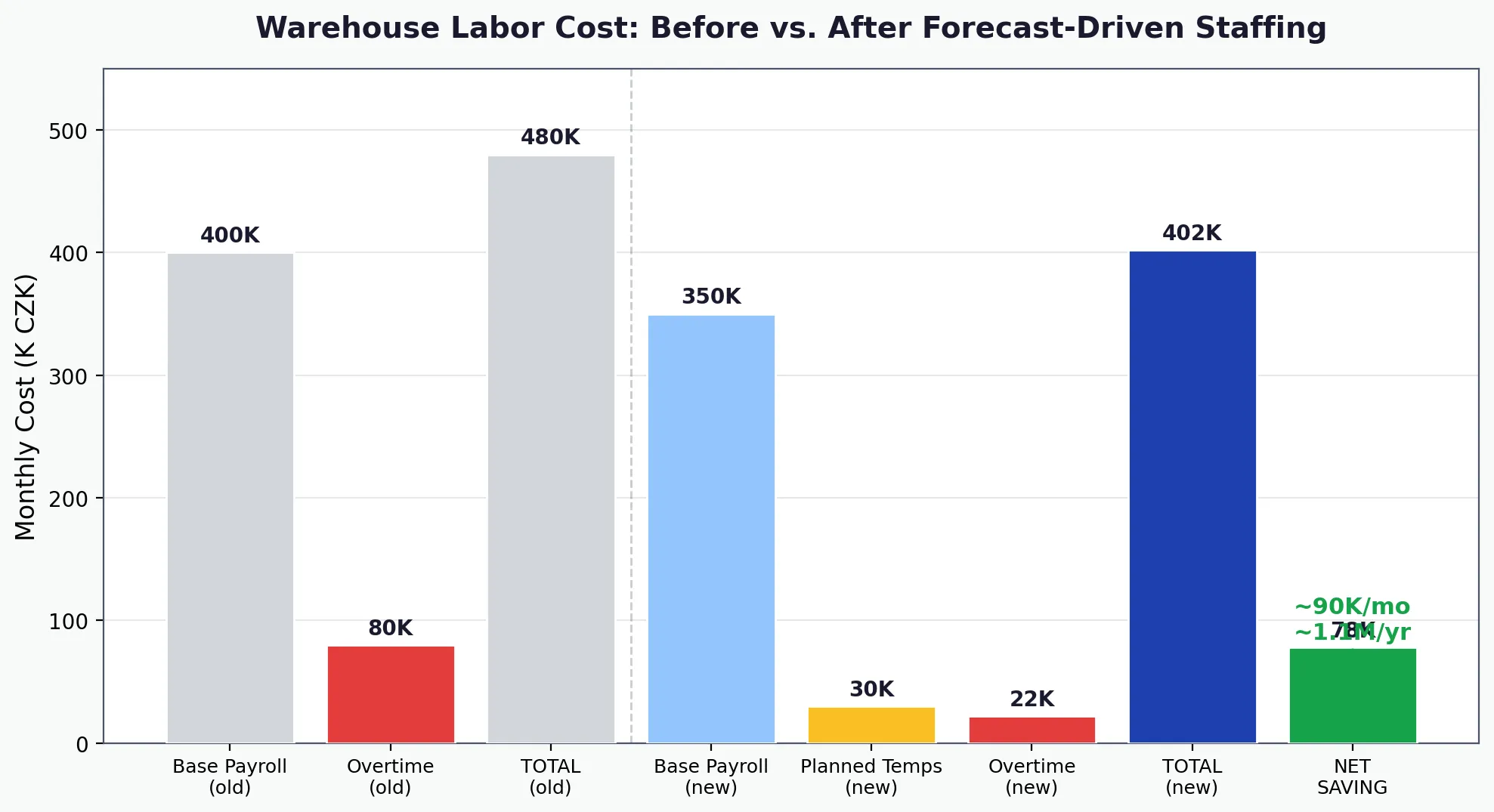
The model assumes 18% lower labour costs. This is an assumption for comparing options, not a demonstrated saving. Include overtime, agency staff and the consequences of delayed orders. Forecast error can also materially affect the result.
People remain responsible for shift decisions
Test the proposal on a later period and compare costs and on-time order completion. Respect employment rules and agreed shifts. Record managers’ adjustments and their reasons. A forecast supports decisions; it is not an automatic instruction to staff a shift.
What the model figures show
The charts and diagrams illustrate the approach described above. Labels within the images are in English.