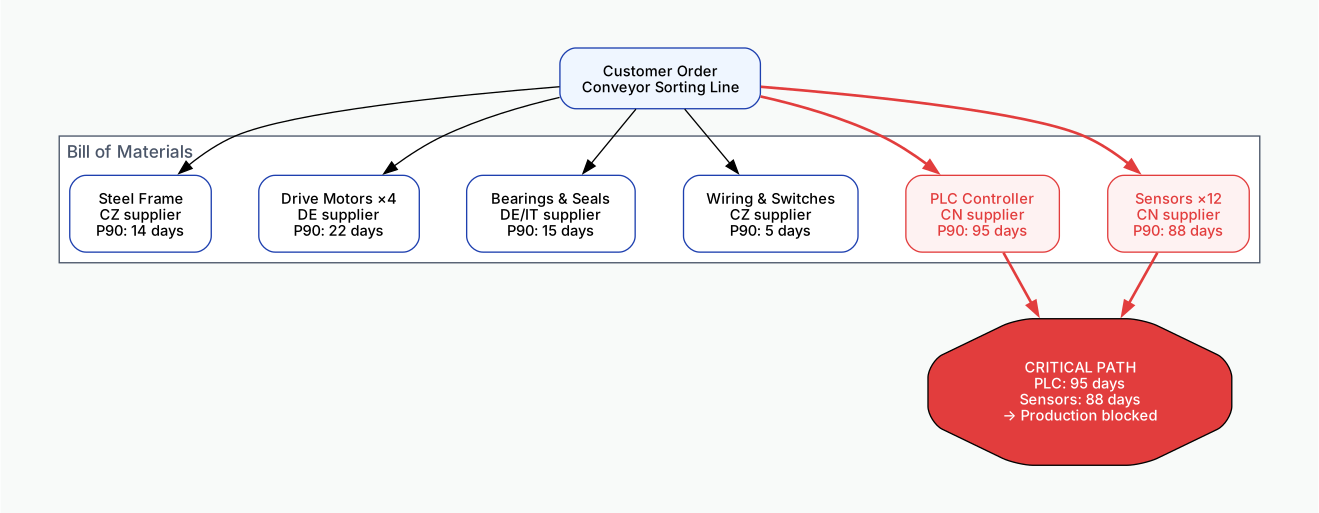
Production is scheduled, but one missing component holds up the whole order. The supplier had promised to deliver on time. How can planning account for actual delivery times that vary?
Compare promised dates with actual receipts
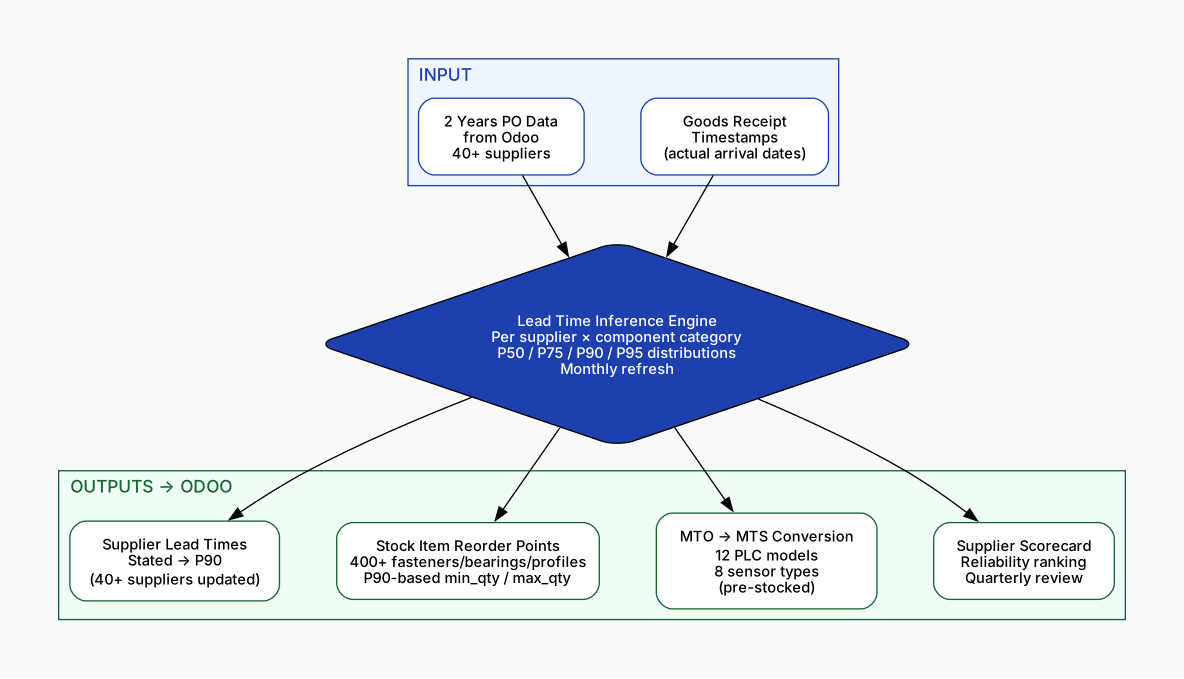
Link orders to confirmed dates and goods receipts, including partial deliveries. Account for product groups and supplier working calendars. Separate transport time from delays in placing orders or receiving goods. Otherwise, an internal delay may be attributed to the supplier.
Set buffers according to risk
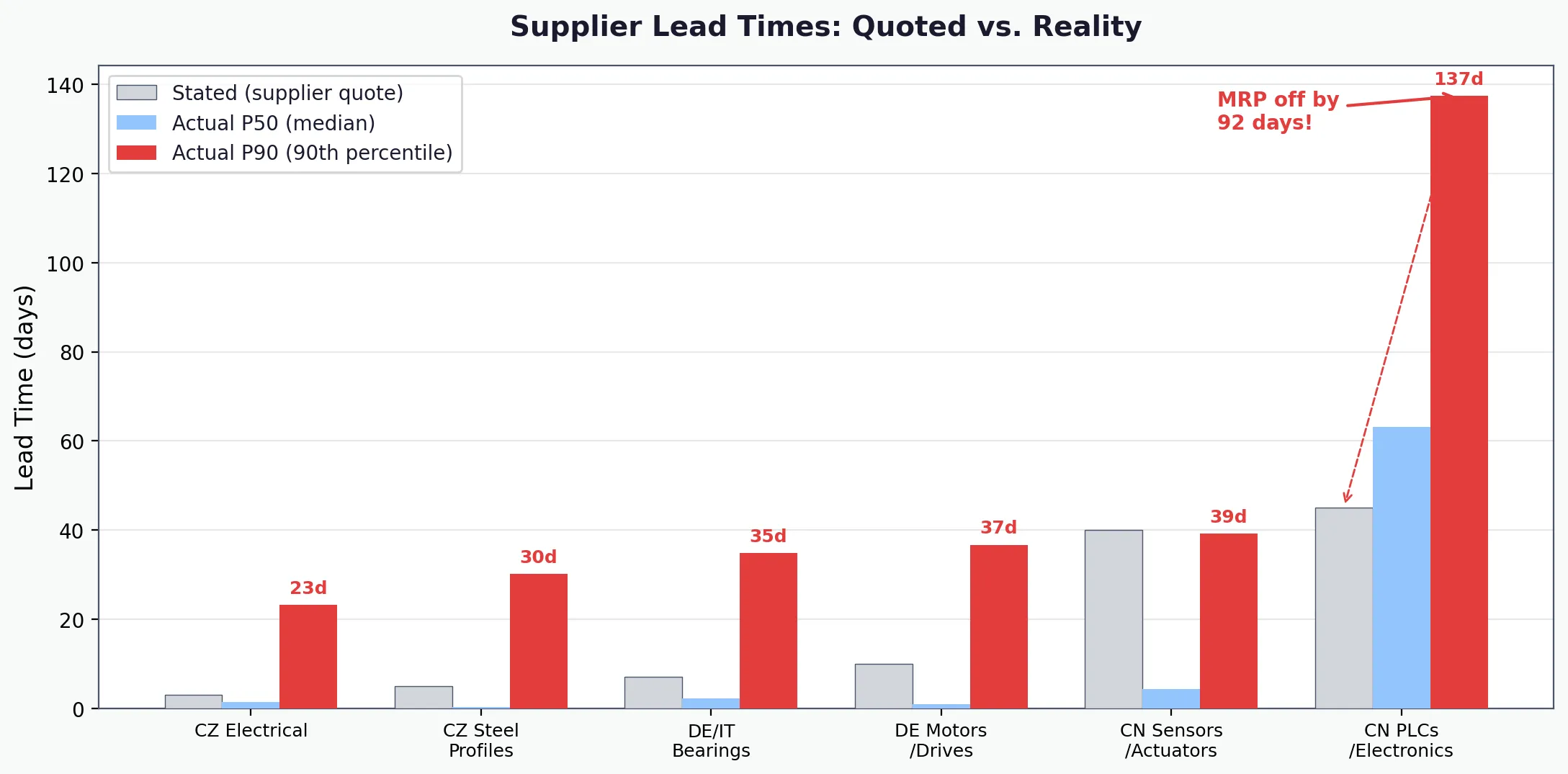
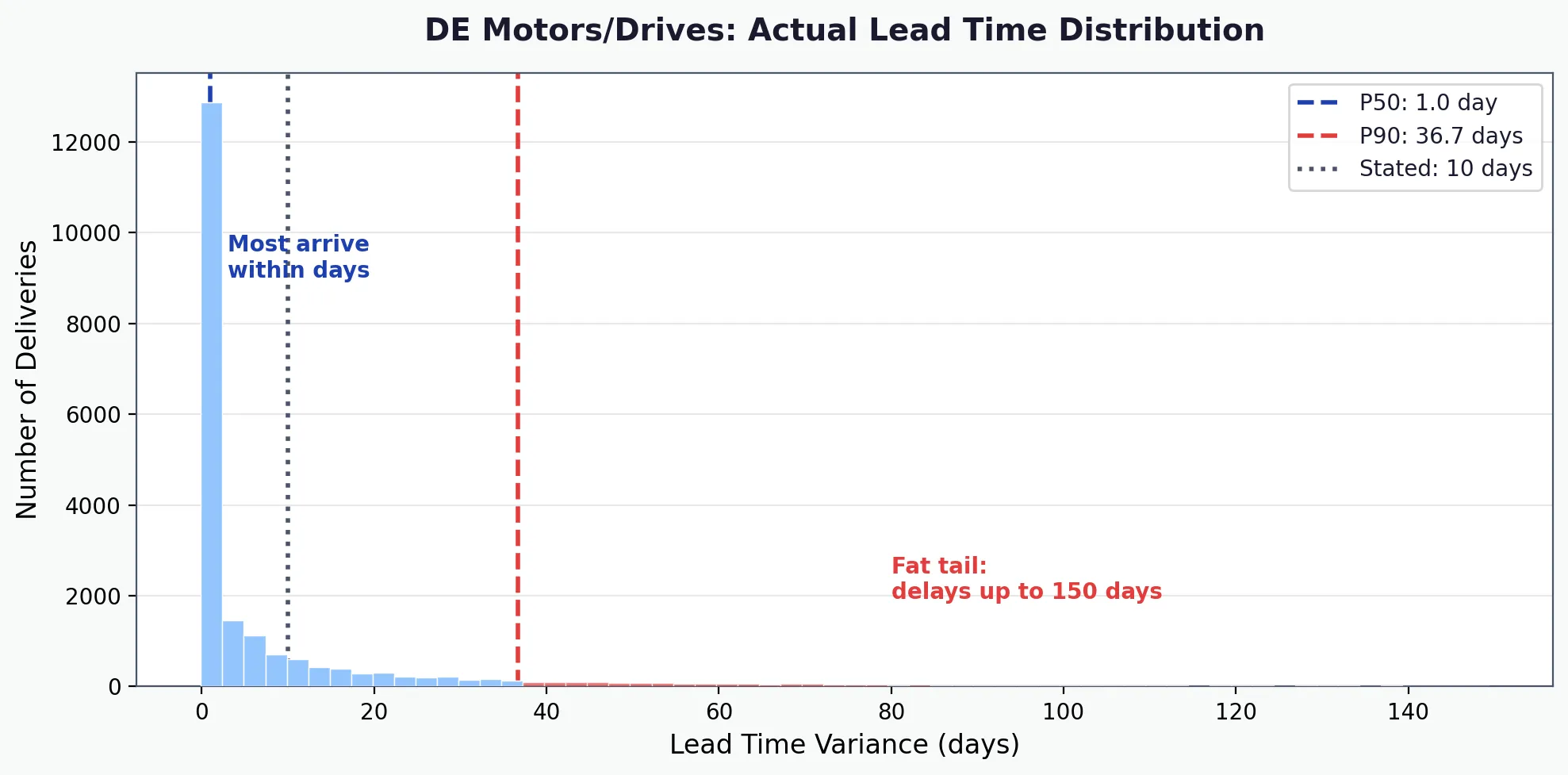
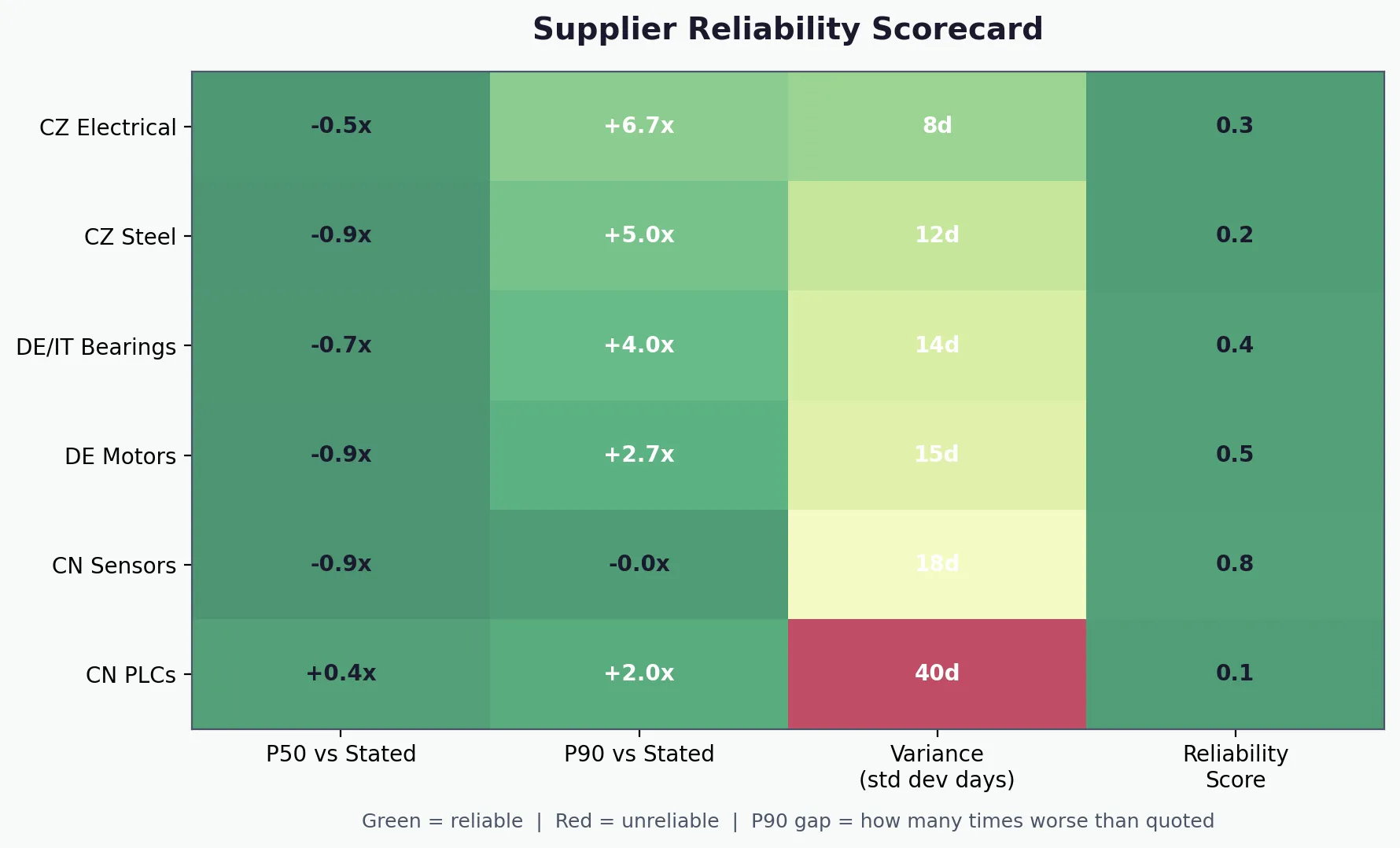
Identify how often individual components arrive late and by how much. For risky supplier-product combinations, propose buffers based on the required rate of on-time material availability. In Odoo, check the effect on stock levels and whether the production plan remains feasible.
Higher availability also has a cost
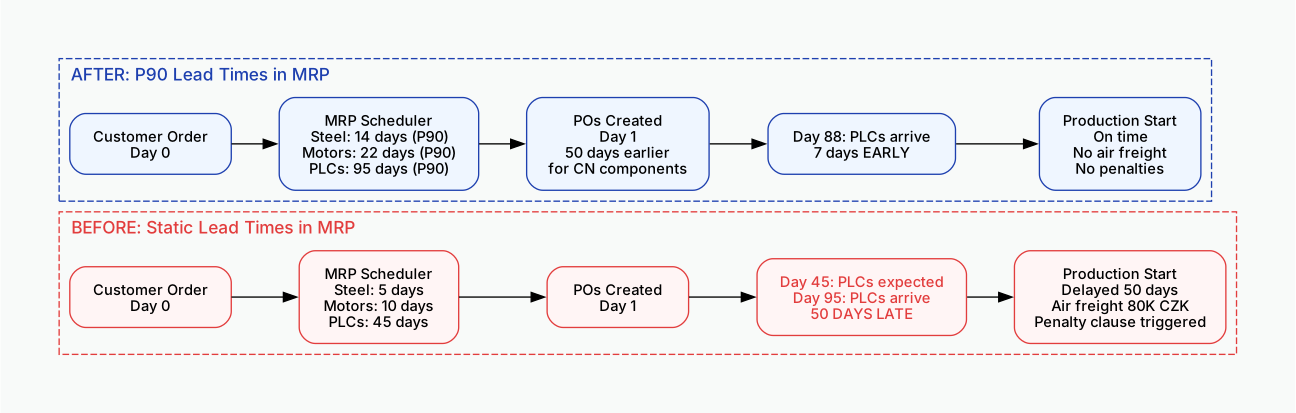
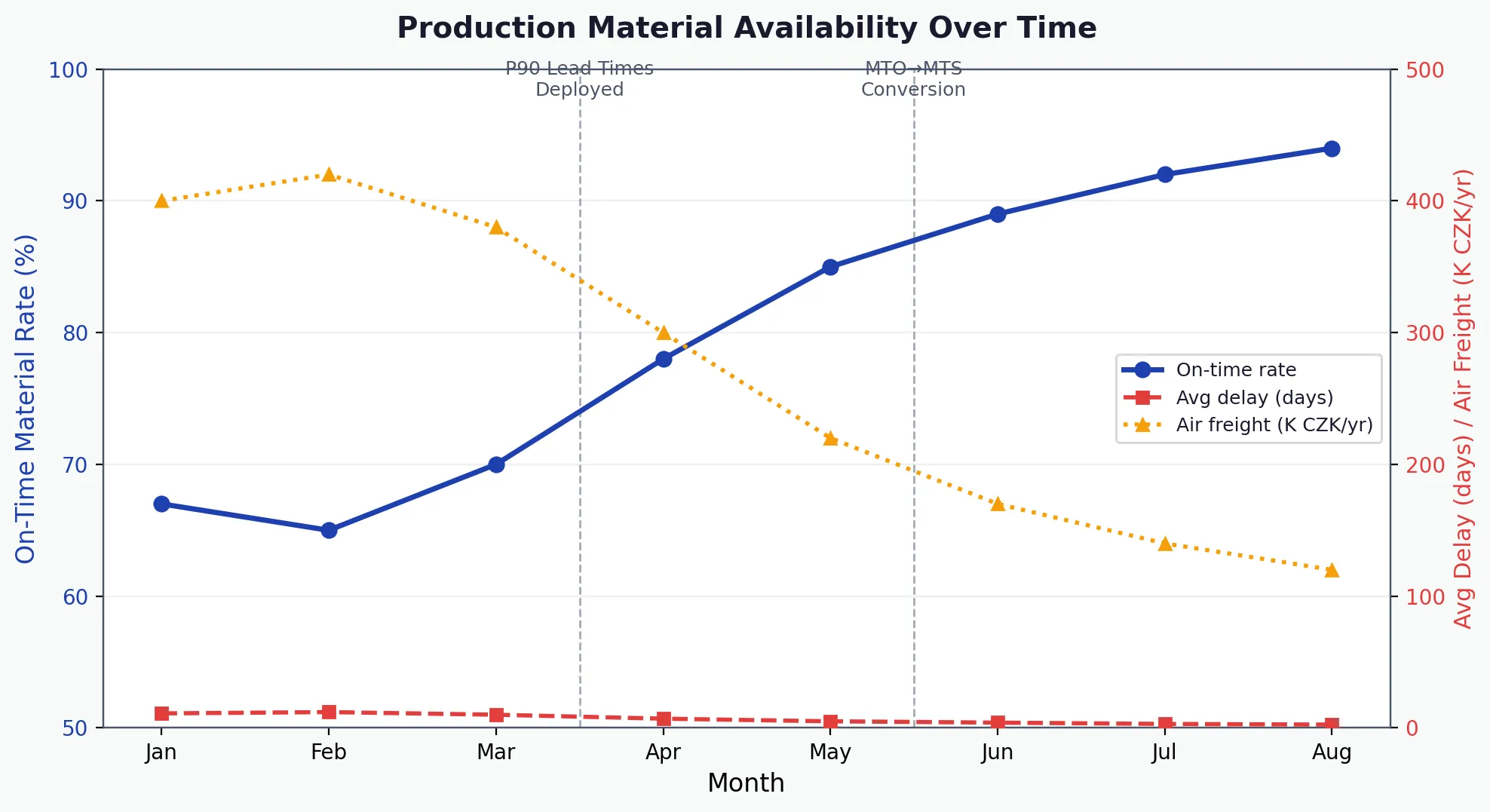
The model compares material availability by the required date at 67% and 94%. The difference is 27 percentage points; it is not a measured implementation result. Larger buffers may cover delays, but they also tie up money and occupy warehouse space.
Test the proposal against later deliveries
Define an on-time delivery before evaluating the rules. Test them on data from a later period than the one used to design them. Account for seasonality and changes in volumes or suppliers. Purchasing and production should jointly approve the final buffers and exceptions.
What the model figures show
The charts and diagrams illustrate the approach described above. Labels within the images are in English.