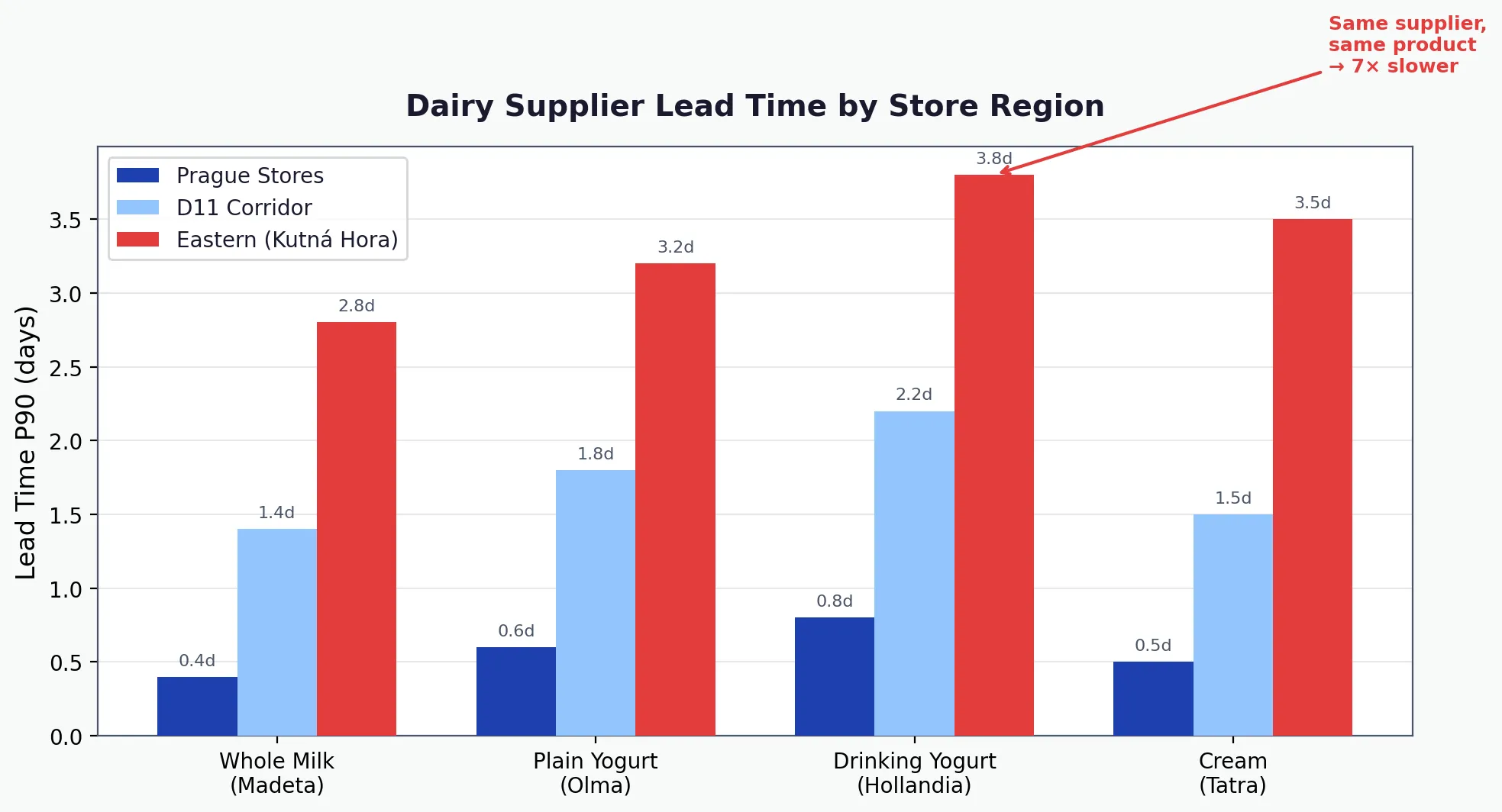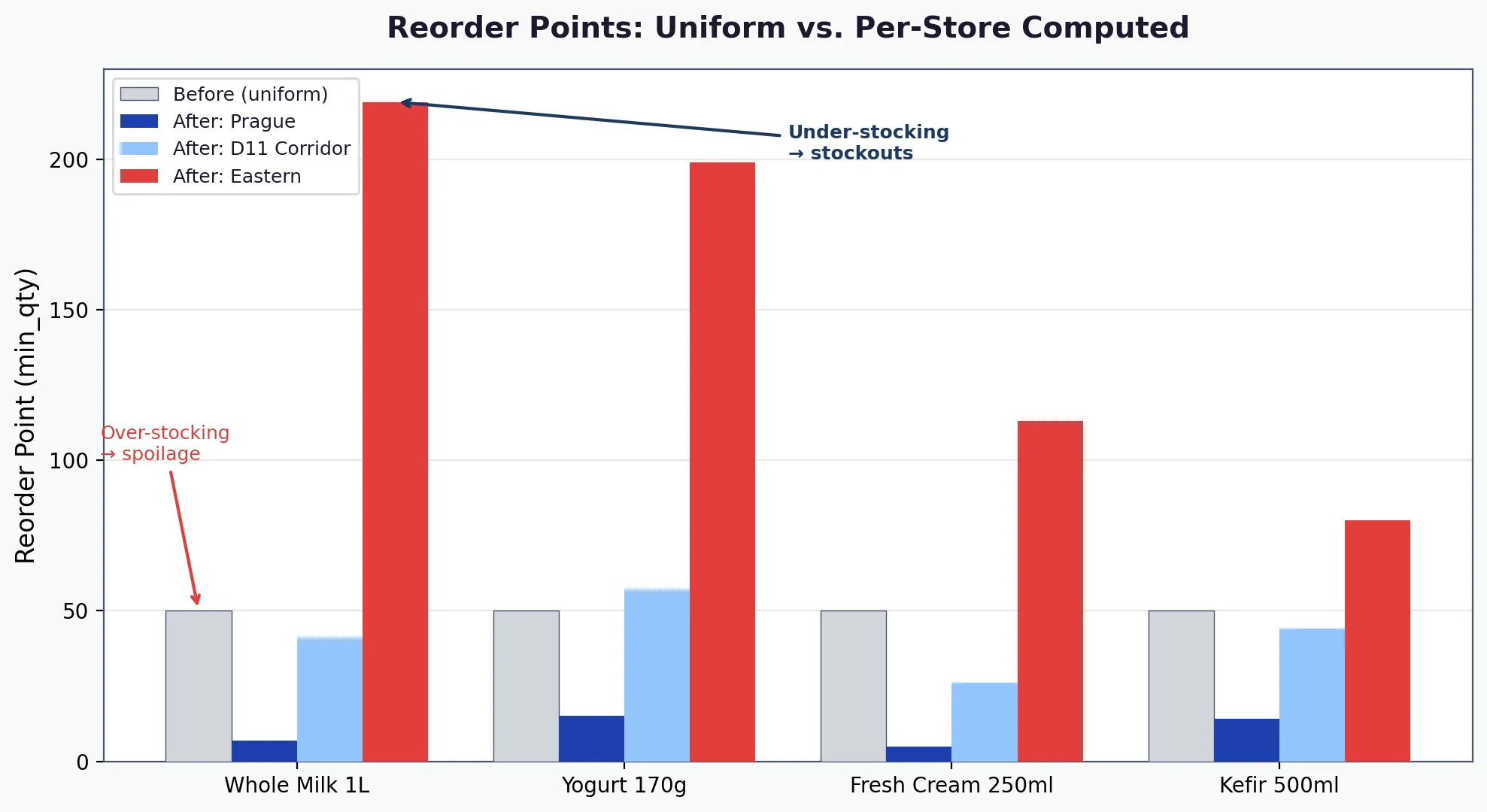
One store has dairy products left over while another runs out. Both use the same ordering rule. How can replenishment account for local demand and the shelf life remaining when products arrive?
Find out why products are left over or unavailable
For each product and store, collect sales with dates and times, goods receipts, write-offs and stockouts. Add pack sizes, shelf life and actual delivery times. A day without sales may mean the shelf was empty, rather than that customers were not interested.
Order what you can sell before it expires
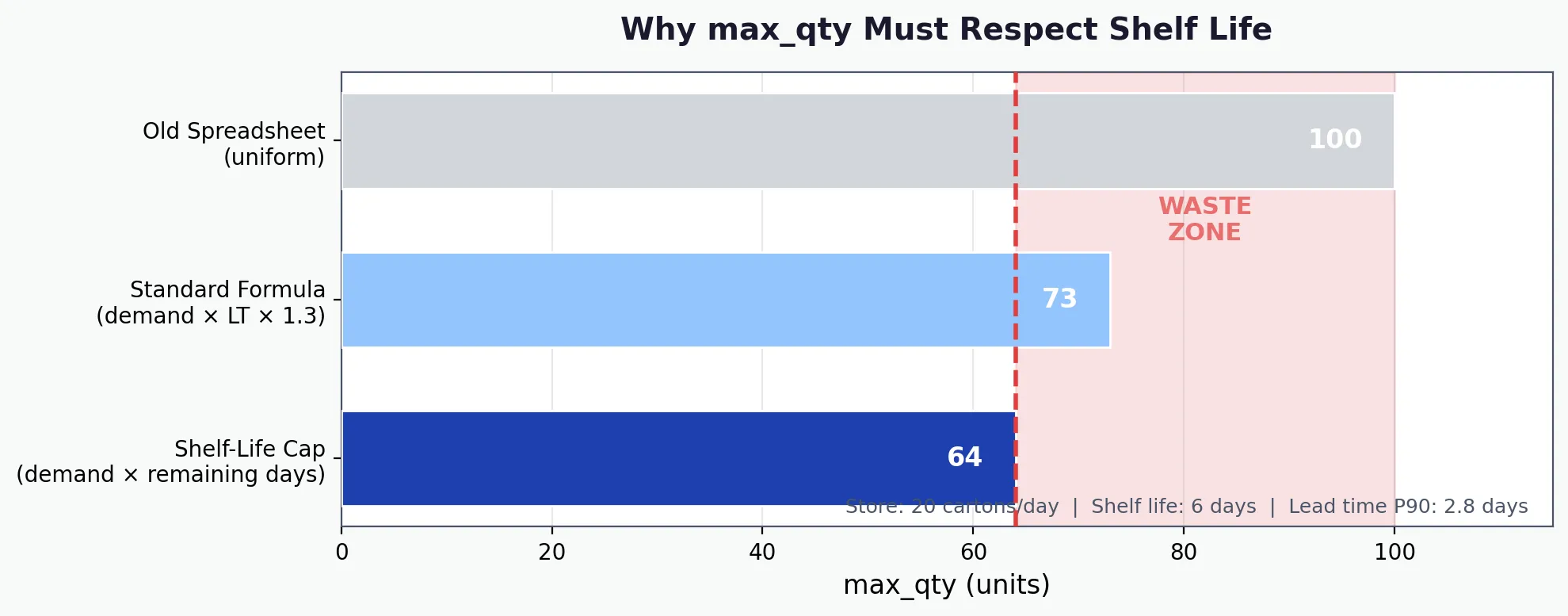
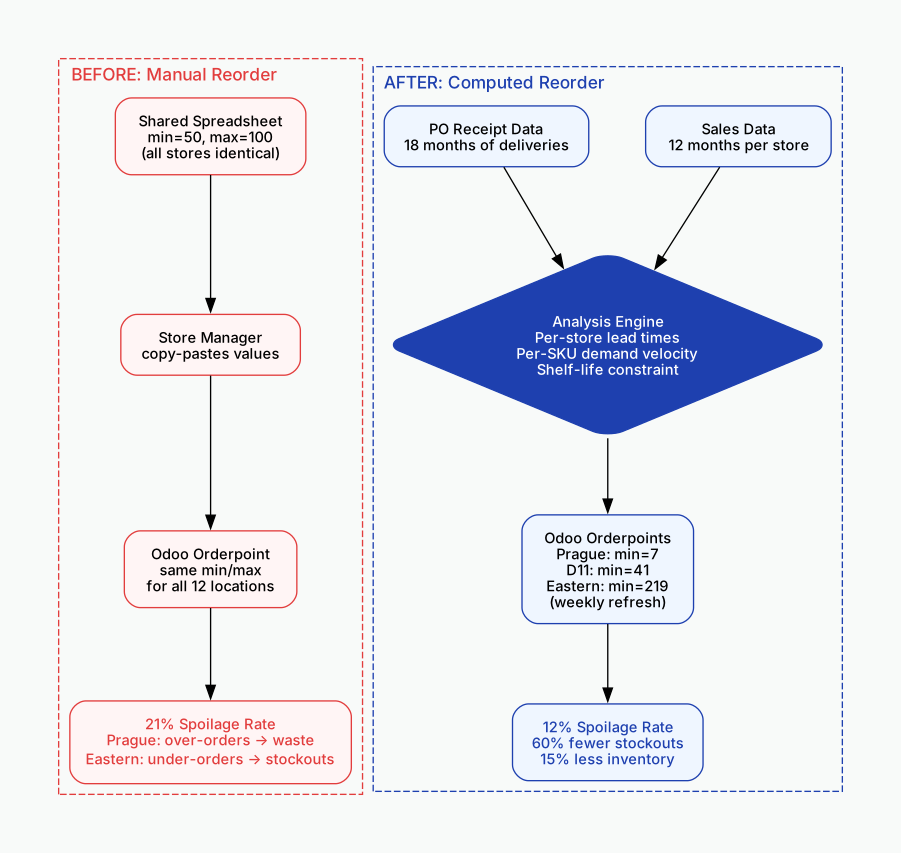
Estimate demand for each store and allow for delivery time. Limit orders to quantities that can sell within the remaining shelf life. Compare the recommendations with existing minimum and maximum stock levels before using them to propose purchase orders in Odoo.
Read the model comparison in context
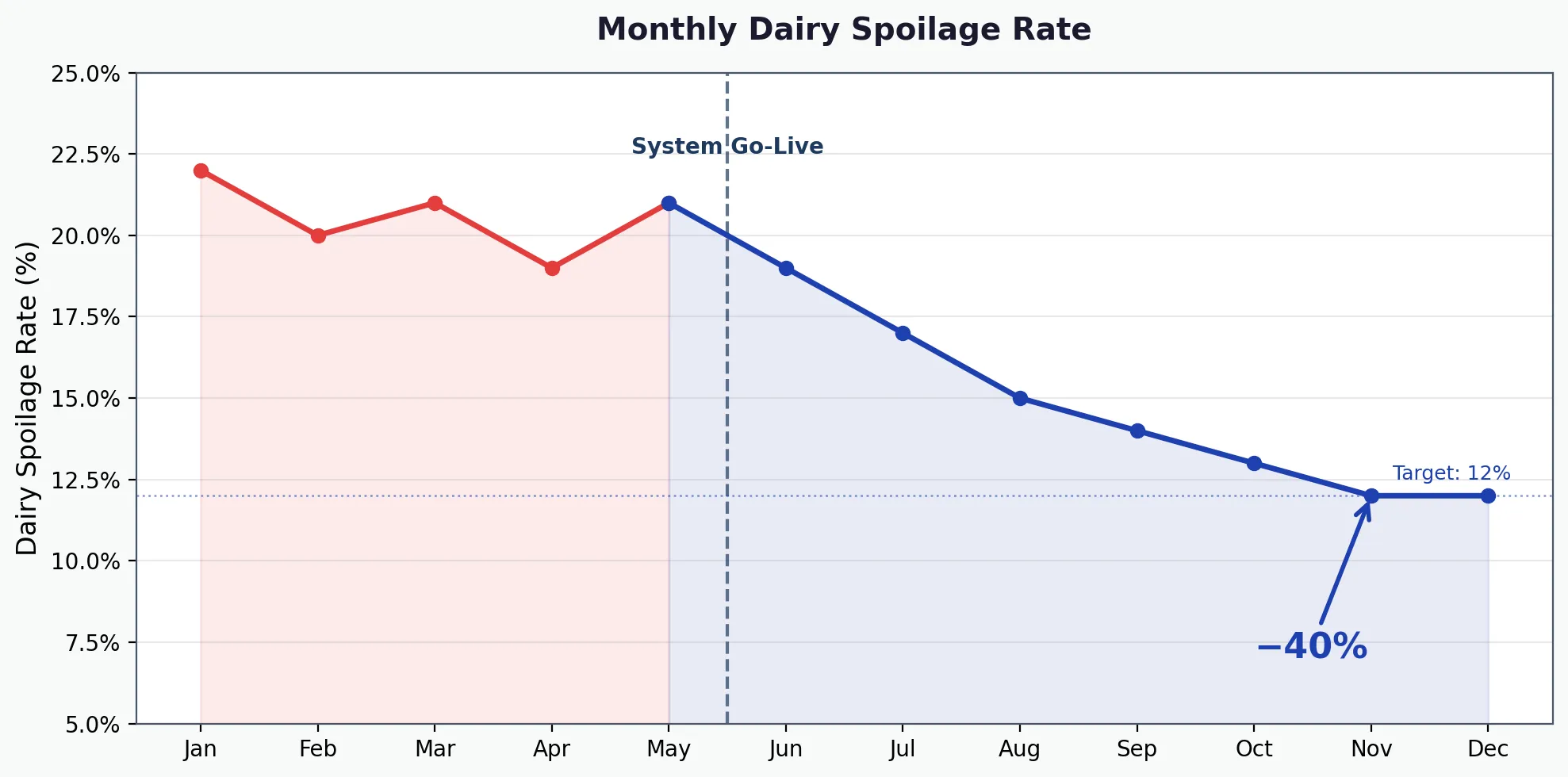
A drop in the spoilage share from 21% to 12% is nine percentage points, or about 43% of the original value. These figures are model assumptions. Also track availability, discounts and product-mix changes: lower write-offs are not enough if more customers leave empty-handed.
Test the rules in daily operations first
Compare similar periods and calculate write-offs consistently. Alongside spoilage, measure stockouts and the ability to meet demand. Have a responsible employee review recommendations initially and record their adjustments. This provides evidence for deciding which steps can be automated safely.
What the model figures show
The charts and diagrams illustrate the approach described above. Labels within the images are in English.