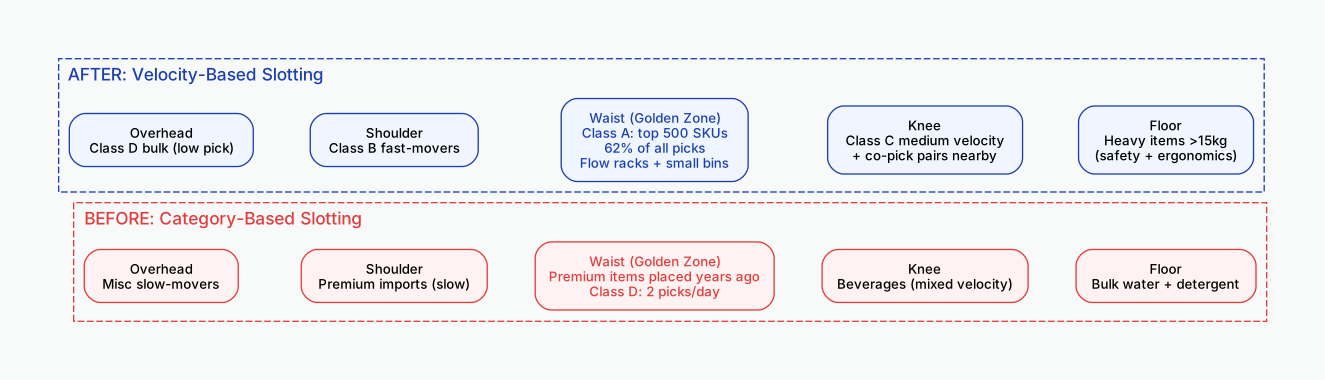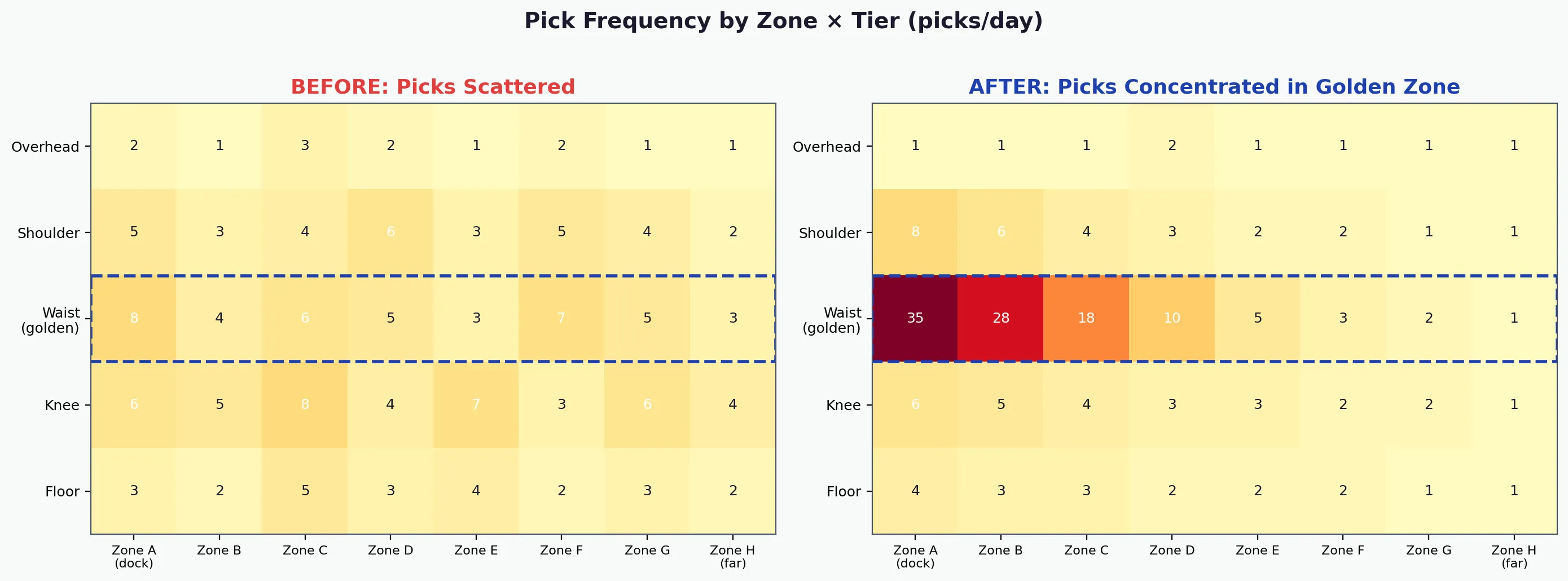
Warehouse staff can spend much of a shift walking between racks. Moving frequently ordered goods closer to dispatch may help, but it must not create a bottleneck or make replenishment harder. How can you test the layout before moving stock?
Prepare data on goods and warehouse movements
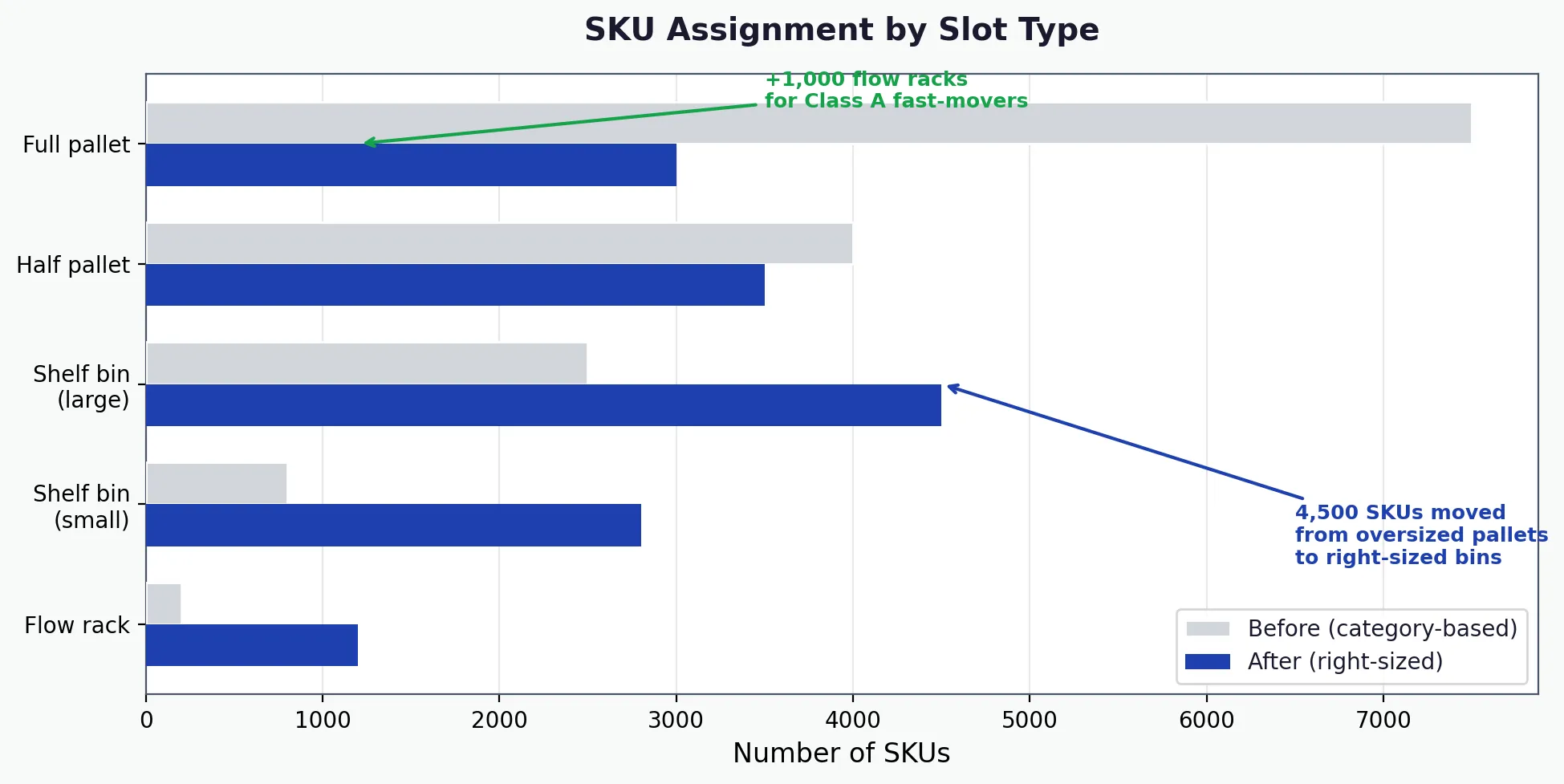
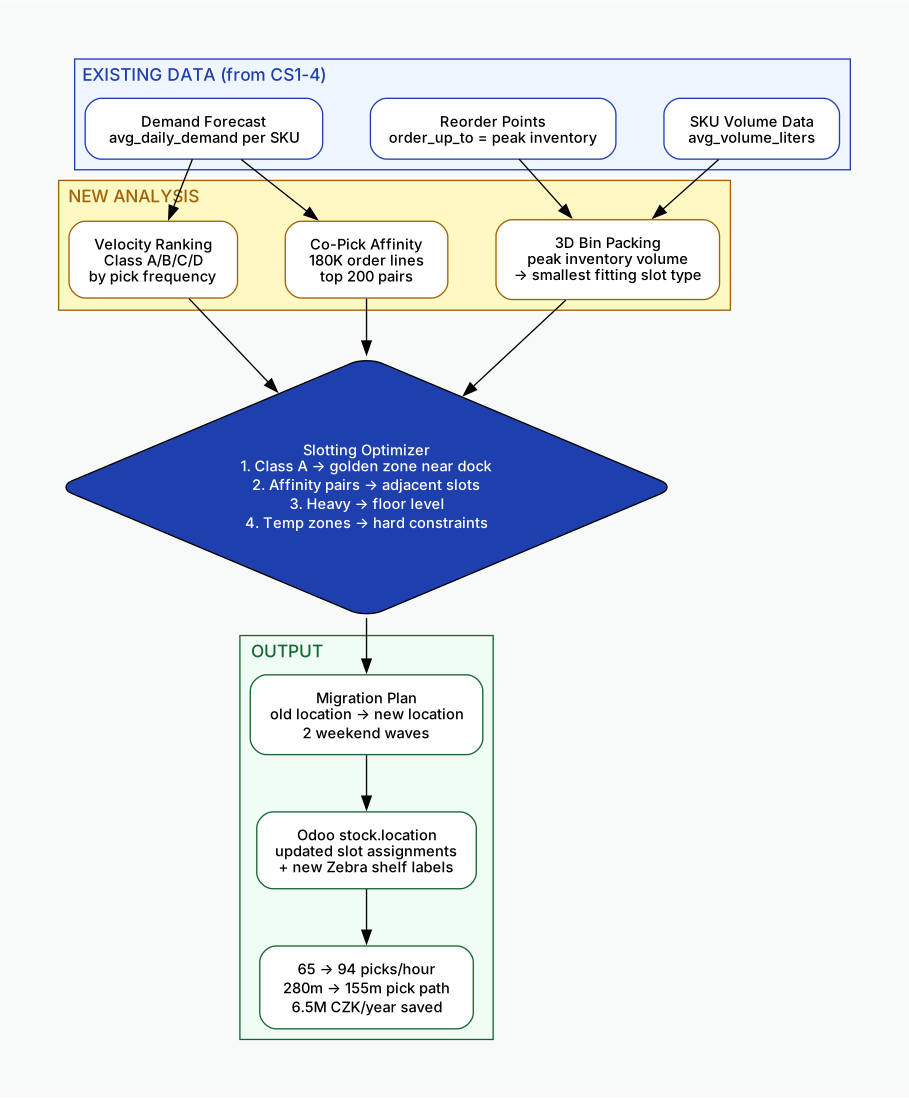
You need order lines, product dimensions and weights, shelf capacities and distances between locations. Add handling rules. Check dimensions and units before proposing layouts or packing plans: errors here can invalidate the entire proposal.
Consider layout and packing together
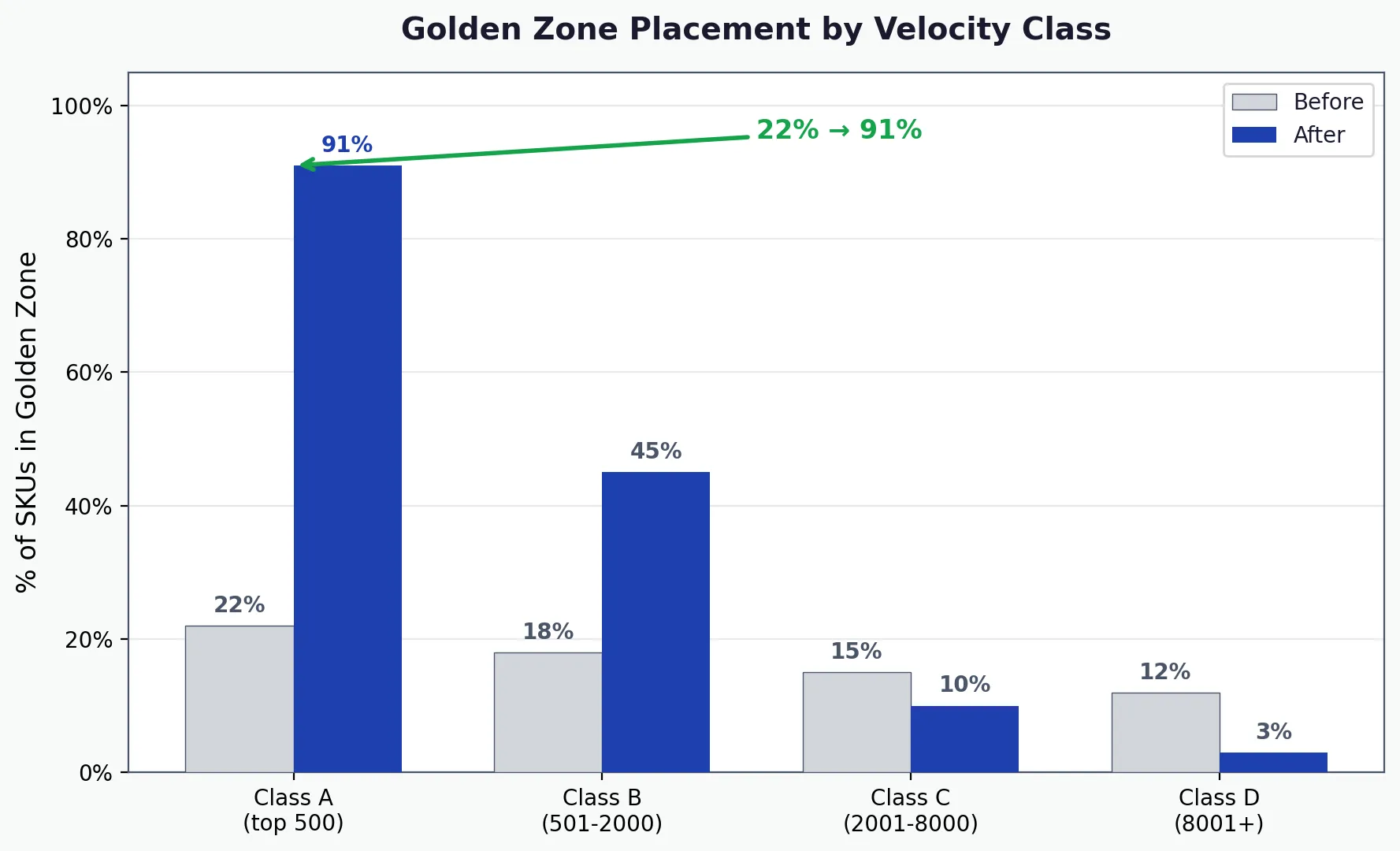
Group products by demand and handling requirements. Check each location’s capacity, safety and suitability for the goods. Test proposed layouts and packing plans against typical orders and routes first. Also consider what happens when several workers need the same location at once.
Understand the model productivity increase
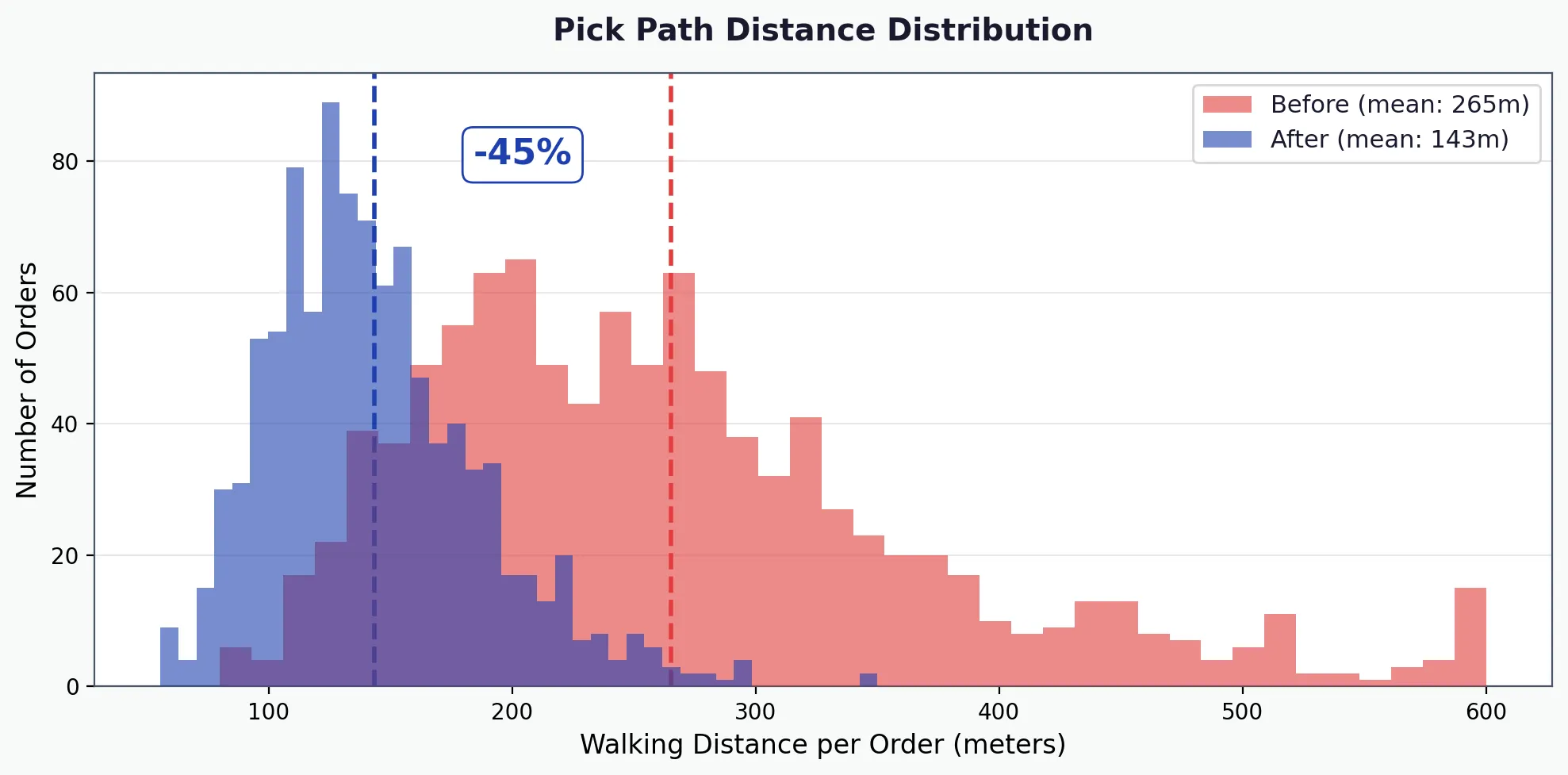
Comparing 65 and 94 picks per hour gives an increase of about 45%. These are model values. Actual measurements depend on order complexity, replenishment, congestion and staff experience.
Start in one part of the warehouse
Try the layout in a limited area first. Measure all related travel and handling time, not only picking. Gather staff feedback and align physical locations with locations and barcodes in Odoo. Check safety and access to goods before extending the change.
What the model figures show
The charts and diagrams illustrate the approach described above. Labels within the images are in English.